Print as PDF
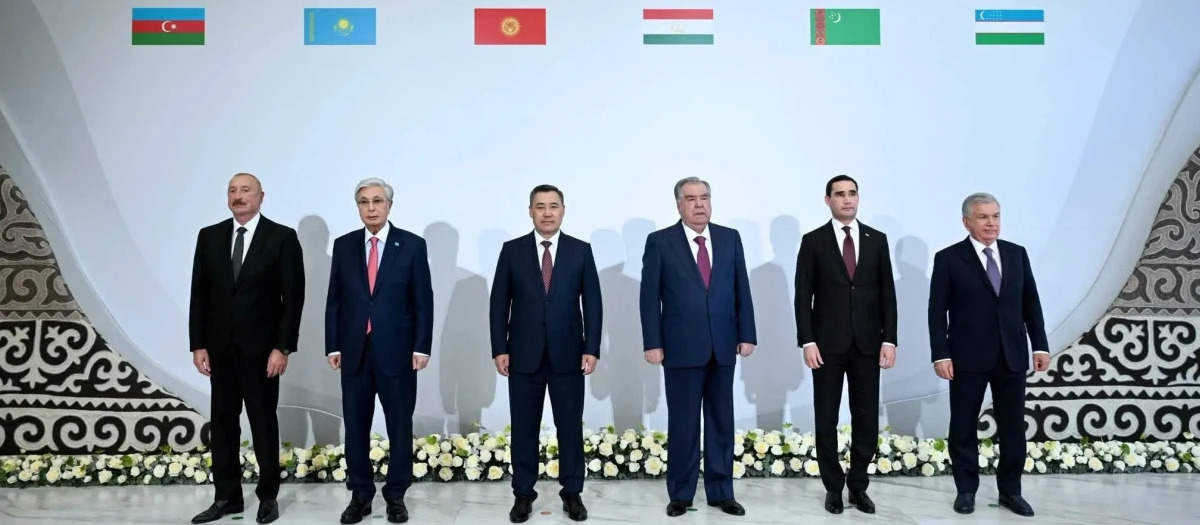
The 31 July gathering of Central Asian and Azerbaijani leaders at Cholpon-Ata in Kyrgyzstan raised few eyebrows. The event was explicitly billed as an informal edition of the Consultative Meeting of the Heads of State of Central Asia, itself a fairly informal annual gathering of the region’s leaders. Kyrgyzstan combined it with two high-level bilateral visits, from Uzbekistan and Azerbaijan, each producing an Allied Relations treaty, and with a showcase of Issyk-Kul and its expanding leisure infrastructure. Why the informal summit needed to be convened at all was never entirely clear. Unless the leaders held substantive discussions behind closed doors, the public proceedings offered little explanation of why the meeting had been convened.
Three observations nonetheless stand out.
First, in 2026 the five Central Asian states completed the Treaty on Friendship, Good-Neighbourliness and Cooperation for the Development of Central Asia in the Twenty-First Century, with Turkmenistan acceding in June as the final signatory. The original text was signed at Cholpon-Ata in 2022, and marking its completion in the same town made good sense. Except that the treaty was barely mentioned last week. The Kazakh president was the exception, drawing attention to the occasion and proposing that the parties move to practical implementation.
Relegating the treaty to a footnote probably had a reason. The summit was the first at which Azerbaijan’s president participated not as an invited guest but as part of the standing group. Celebrating a treaty that excludes Baku would have made little sense. That small tension, between what now counts as Central Asian and what does not, will run through the region’s diplomacy for years to come.
Second, Azerbaijan’s accession duly became the main headline of the commentary. Observers read it as confirmation of the primacy of the Middle Corridor and of the transport routes that make Azerbaijan and Central Asia partners. The architectural shift is real, and there is no deficit of remarks on the subject. One point, however, somehow evades most coverage.
Too many commentaries referred to Baku’s accession as “C5 becoming C6”. This is a misnomer. A five-party summit did admit a sixth member, but the consultative meetings were never referred to as C5. No equivalent of the term exists in Kyrgyz, Uzbek or even Russian political vocabulary. C5 is found only inside the formula C5+1, where it denotes arrangements in which the five Central Asian states engage an external partner. Japan pioneered the five-plus-one structure, followed by South Korea. The designation C5, however, became widely used only after the United States launched its C5+1 format at Samarkand in 2015. It was subsequently applied across a growing range of dialogues with the European Union, China, India, Germany, Italy, Russia and others.
The Consultative Meetings of the Heads of State of Central Asia were, by contrast, a refreshingly home-grown platform, launched at Astana in 2018 on Uzbekistan’s initiative. There was no outside partner and no external agenda. The participants were the leaders of the Central Asian states, and nobody called the event C5.
The temptation to carry C5 across from the C5+1 formula is understandable. But doing so imports the vocabulary of externally convened formats into a platform created by the Central Asian states themselves. More importantly, it misleads: C5+1 summits over the coming months may continue to include only the five Central Asian states.
Whether C5+1 turns into C6+1 is an open question. It is not unlikely, since at least some external partners will prefer to meet Aliyev alongside the Central Asian leaders while transport routes remain the leading item on the agenda. That will happen when it happens. In the meantime, on 16-17 September the five Central Asian presidents are due to meet President Lee Jae Myung in Seoul for the inaugural Central Asia–Republic of Korea summit. Azerbaijan took no part in the senior officials’ meeting that prepared the summit in April and is not included in the format. So, six weeks after Cholpon-Ata, Central Asia will again be represented internationally by five states.
The third observation concerns the future of Central Asian regionalism. Since the early 1990s it has remained elusive – attractive, yet difficult to achieve. At various points the obstacles included the Tajik civil war, Turkmen neutrality and Uzbekistan’s first president, each preventing the emergence of an all-five platform. The best iteration, the four-party Central Asian Cooperation Organization of the early 2000s, disappeared into the larger EurAsEC in 2005, a year after Russia’s accession. It took thirteen years for a new regional platform to emerge, bringing together all five leaders. Although institutionally light and centred on an annual presidential meeting, it revived the hopes of those who take Central Asia seriously as a political region.
Azerbaijan’s accession today is plainly different from Russia’s accession then. But in one respect the implication is the same. There is no longer a Central Asia-only format at the highest level. Should the five need to meet and talk among themselves, they retain ample opportunity on the margins of C5+1 gatherings in Beijing, Brussels and other capitals. What has disappeared is a dedicated table reserved for them.
The consultative meetings succeeded in normalising regular presidential dialogue, but the five governments showed little appetite for turning them into a more institutionalised regional body. Widening the format therefore proved more achievable than deepening it.