
Eva Morgan is a Research Assistant at Crossroads Central Asia. She is pursuing a BA in Arabic and Russian at the University of Oxford.
Download PDFOn 8 December 2024, Bashar al-Assad fled Syria to Moscow, ending the Assad family’s 53-year rule. The collapse was the culmination of the Deterrence of Aggression offensive led by Hay’at Tahrir al-Sham (HTS) and the Turkish-backed Syrian National Army. The new government, led by President Ahmed al-Sharaa, has established a five-year transitional period until 2030, while foreign governments watch closely for signs of a slide into strict Islamist governance given HTS’s origins as al-Qaeda’s Syrian affiliate, formerly known as Jabhat al-Nusra.
For Central Asia, the fall of Assad has reshaped a long-standing concern: the fate of Central Asian foreign fighters who travelled to Syria during the Civil War. These fighters can now be divided into two categories — those who fought with HTS and are being integrated into the new Syrian army, and those held in increasingly untenable ISIS detention camps in the Kurdish-controlled northeast. Both carry significant implications for regional security.
Integration into the Syrian Army
While exact numbers are unclear, reports suggest that at least 2,000 foreign fighters from Kazakhstan, Kyrgyzstan, Tajikistan, Turkmenistan, and Uzbekistan went to fight in the Syrian Civil War — this figure excludes families. Estimates more generally suggest 8,000 to 18,000 foreign fighters and families are being held in detention centres in the Kurdish-controlled north. Around 3,500 of those who supported al-Sharaa have since been integrated into the new Syrian army’s 84th Division.
Given the green light from the United States, al-Sharaa’s government has chosen to integrate foreign fighters into the new Syrian army’s 84th Division, in a deeply risky strategy of “pragmatic normalisation”, or rather the “least bad option.” Out of almost 50 new military roles that have been announced, at least six have gone to foreigners. Most notably for Central Asia, Tajik national Saifiddin Tojiboev was reportedly appointed head of operational headquarters in the Ministry of Defence. The logic behind this comes from a global approach to terrorism which understands that expelling foreign fighters to their countries of origin would destabilise an even bigger geographical region, particularly as foreign fighters are often noted to be even more radical than Syrian and Iraqi soldiers in HTS.
On the one hand, if Central Asians choose to stay in Syria and be integrated into the army and society, it reduces the burden on Central Asia to process and rehabilitate every one of its citizens. Those who choose to return, already a self-selecting group, can be given more attention for a more successful chance of full rehabilitation. Keeping their job and pay ensures that extremists are occupied by a cause other than ISIS, and avoids the disastrous consequences seen by the American blacklisting of all Baathist party members during the invasion of Iraq, which partially led to the creation of ISIS itself.
On the other hand, Central Asian Islamic extremists are being legitimised through acceptance by the Syrian government. This reduces the visibility of punishment for Islamic extremism, which could lead to increased support for such movements. Moreover, established Central Asian extremists in Syria could turn into a source of advice and support for local cells in Central Asia, leading to regional instability through increased terrorist activity.
In balance, however, given that foreign fighters choosing to stay in Syria are less likely to be successfully deradicalised, integration into the Syrian army appears the better option for Central Asia itself, on the condition that greater funding is allocated for anti-terrorism and regional security to anticipate a potential surge. The immediate danger of a new regime expelling these fighters back to Central Asia has been averted — but this could change. Sectarian violence and the growth of an opposition movement could fragment the new government, and the opposition may increasingly view the integration of foreign fighters as the international community exporting its problem onto Syria. “Syria is free, non-Syrians must leave,” protesters said after the burning of a Christmas tree in a Christian neighbourhood of Damascus by foreign fighters in December 2024. Central Asian countries would be wise to plan for this likelihood, making the most of al-Sharaa’s delay of a jihadist exodus to develop policy on a sudden influx of highly radicalised fighters.
The Danger of ISIS Detention Camps
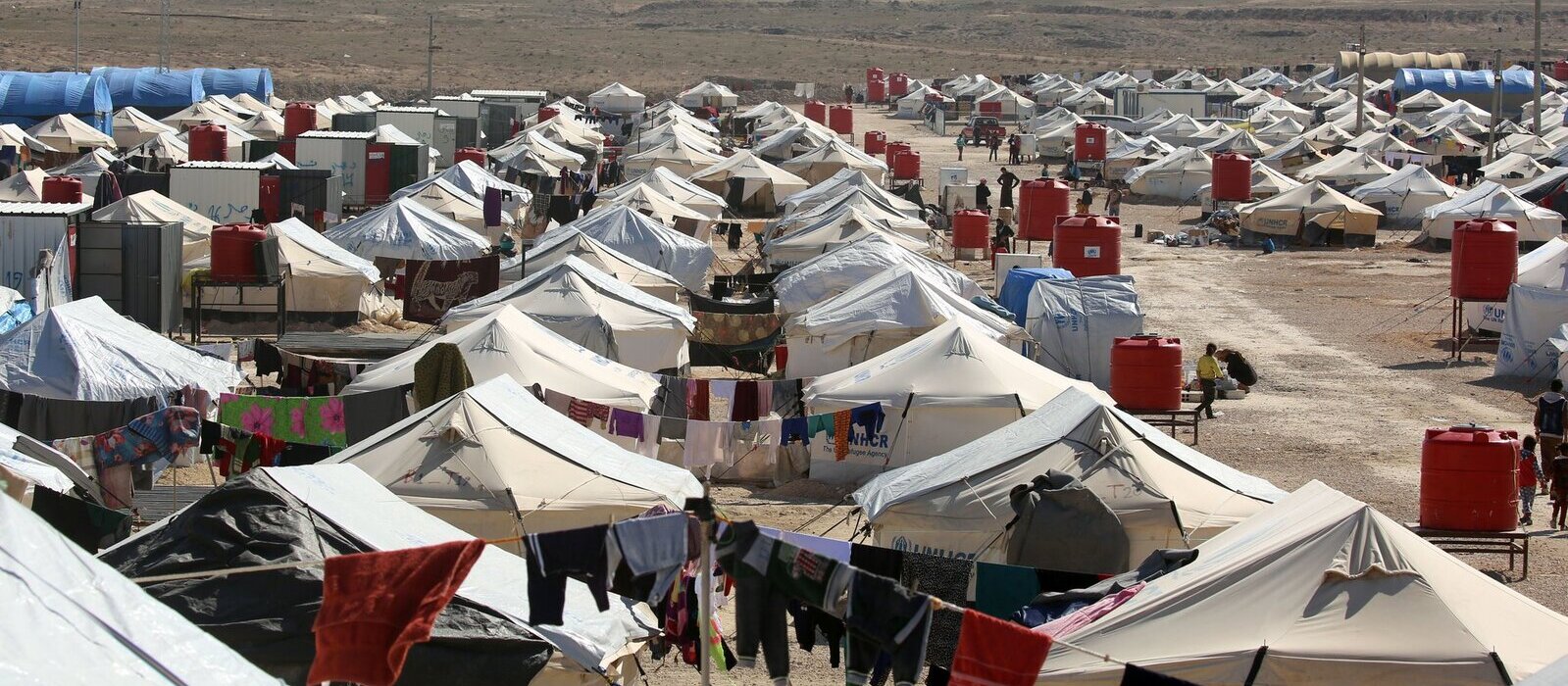
The ISIS detention camps in northern Syria present a separate and arguably more pressing challenge. The “powder-keg” prison camps are the most unstable factor in Central Asia’s repatriation challenge, particularly due to their potential for sudden collapse. Around 50,000 ISIS fighters and their families remain spread across 27 prisons and detention centres, 8,000 to 18,000 of whom are foreign fighters. A UN report in 2023 described open sewers, inadequate housing, limited access to basic necessities, routine violence, and sexual assault. While these camps restrict the ISIS terrorists of today, they simultaneously radicalise and unite a new generation of extremists — 60 percent of detainees at al-Hol and 63 percent at Roj are children, exposed to only ISIS ideology.
The Trump administration’s decision to cut all funding for Blumont, an NGO providing $117 million in essential camp services and security, has heightened the risk. In the first half of 2025 alone, ISIS carried out 149 attacks in northeastern Syria, killing 63 and targeting military outposts. The Syrian government’s relationship to these camps remains unclear, and HTS’s integration of foreign fighters into the army complicates matters further, as it is unclear to what extent HTS considers detained fighters potential allies.
Central Asia’s Repatriation Record
Central Asian countries must prepare for the possibility of these camps’ collapse. Fortunately, the region is in a much stronger position than many other countries. While UN Security Council Resolution 2178 (2014) called for states to develop prosecution, rehabilitation, and reintegration strategies for returning foreign terrorist fighters, most countries have been reluctant to repatriate — the UK’s removal of citizenship in the case of Shamima Begum is emblematic. Central Asian countries, by contrast, are world leaders in repatriation. By March 2024, over 2,100 individuals had been repatriated through humanitarian missions: Kazakhstan welcomed back 754 of its citizens, Uzbekistan 531, Kyrgyzstan 511, and Tajikistan 334.
Rehabilitation programmes differ from country to country, but share a common three-stage structure: (1) adaptation in supervised environments with psychological and medical attention; (2) rehabilitation; (3) reintegration into familiar environments alongside social support. Uzbekistan’s programme can be considered one of the most developed, integrating NGO support, supervised work placements, and the inclusion of otin-oyi (religiously literate women), as well as an imam, to help returning women adapt to local traditional forms of Islam. However, it should be noted that these programmes have largely catered for women and children who have voluntarily returned. The harder challenge of dealing with male fighters who personally committed crimes for ISIS remains largely unaddressed.
Looking Ahead
An in-depth report from the United States Institute of Peace advised, among other measures, the development of specific action plans for reintegration, reduction of stigmatisation of returnees, and building capacity at initial processing centres. These recommendations should now be developed to include emergency capacity — frameworks to rehabilitate those returned to Central Asia involuntarily, and methods focused on male fighters. A dual system of rehabilitation and imprisonment may be better suited to forced returnees from detention camps, considering the extremist organisation by ISIS loyalists seen in al-Hol camp. The simplified gendered view of women “fraudulently taken to this crisis-stricken country, where they were held hostage by terrorists” does not match the reality in all cases.
Al-Sharaa’s provisional government offers Central Asia a grace period to dramatically increase the capacity of rehabilitation programmes. The integration of Central Asian fighters into the Syrian army is, on balance, beneficial for regional stability, though greater attention to bonds between regional radical groups and new players in the Syrian army must be given. Efforts to repatriate Central Asians in untenable detention camps must be continued, and existing rehabilitation processes should be improved. Most crucially, Central Asian governments must plan for scenarios that would impact the region far more than al-Sharaa’s government currently does: civil war, an opposition that expels foreign fighters, or the collapse of ISIS detention centres could all trigger a sudden influx of radicalised individuals still loyal to ISIS.
Central Asia’s determination over a decade to repatriate its citizens from Syria is a positive, world-leading policy. If Europe is eventually forced to change its position on repatriation due to the imminent collapse of detention camps, Central Asia can offer advice and time-tested frameworks. The benefits would extend beyond regional security to improved international relations and the growth of Central Asia into a global leader on the issue of post-conflict rehabilitation.
This report is part of Crossroads Central Asia’s series highlighting analytical work by emerging scholars working on the region.